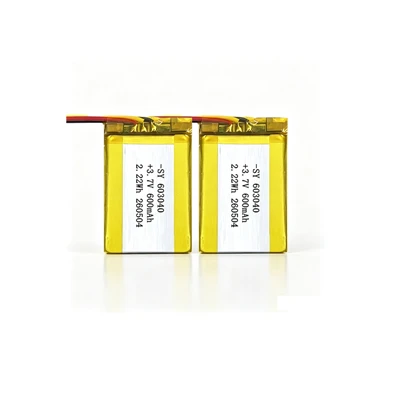
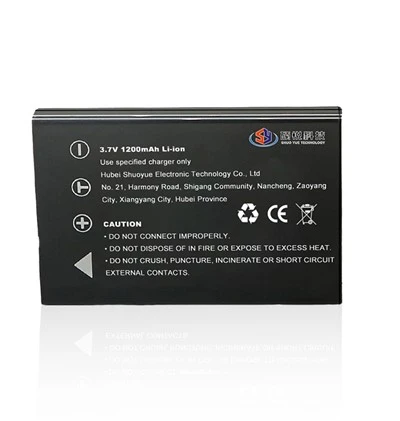
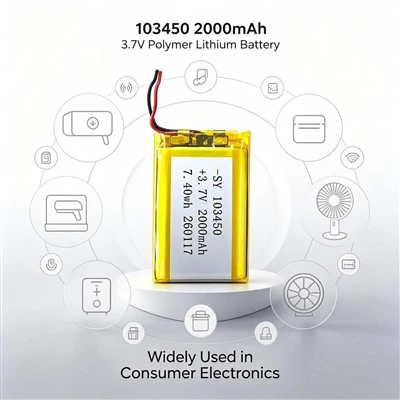
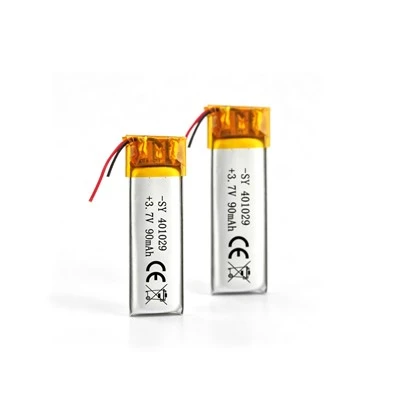
There are some significant differences between polymer lithium batteries and lithium batteries, which are mainly reflected in the following aspects:
- Positive electrode material: The positive electrode of polymer lithium batteries uses polymer lithium ion salt, while the positive electrode of lithium batteries uses liquid lithium salt solution.
- Shape design: The shape of polymer lithium batteries can be changed arbitrarily, with high flexibility, suitable for devices of various shapes. The shape of lithium batteries is relatively fixed, generally cylindrical or flat.
- Energy density: Polymer lithium batteries usually have higher energy density, which means that they can store more electrical energy at the same weight or volume, so they can be used for a longer time.
- Voltage: The voltage of polymer lithium batteries is generally higher, usually around 3.8V, while the voltage of lithium batteries is between 3.2V and 3.6V.
- Safety performance: Because polymer lithium batteries use solid electrolytes, their safety performance is relatively better and they are not prone to leakage or explosion. In contrast, the liquid electrolyte of lithium batteries has the risk of leakage and explosion when overcharged, over-discharged or physically damaged.
- Charging speed: Polymer lithium batteries usually charge faster because their cathode materials can absorb and release lithium ions faster.
- Application areas: Lithium batteries are widely used in mobile phones, laptops, electric vehicles and other fields due to their high energy density and mature technology. Polymer lithium batteries have advantages in scenarios with high safety requirements such as aerospace and smart wearable devices due to their higher safety and flexible design.