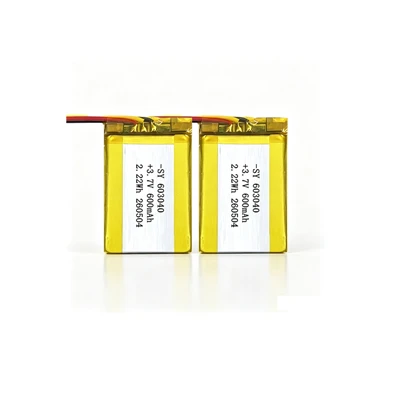
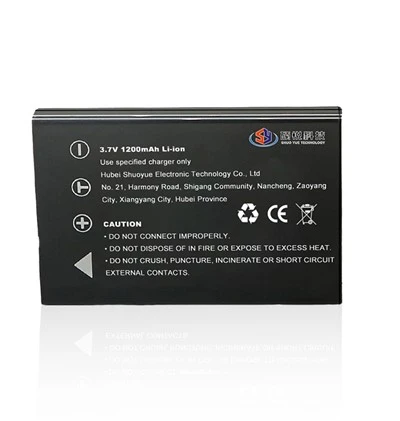
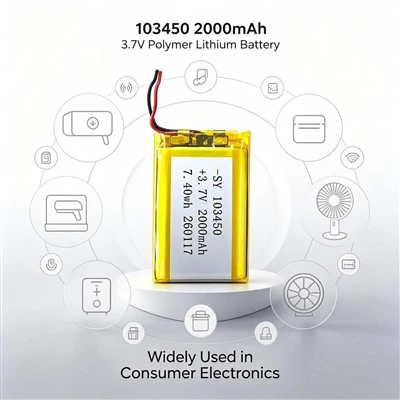
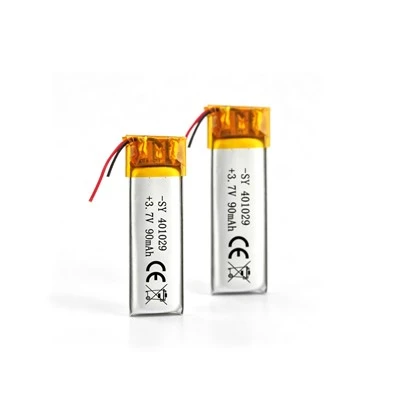
Lithium-ion batteries were commercialized as early as 1992, while lithium polymer batteries were commercialized only 7 years later. Despite this, since Sony's commercial production in 1999, the development of liquid lithium-ion batteries has lagged behind the development speed of lithium polymer batteries. In 2002, 7% of the market share of lithium-ion batteries was occupied by lithium polymer batteries. By 2005, it accounted for about 9.3% of the market share, and by 2010 it had risen to about 30%.
Lithium polymer batteries are quite advanced rechargeable batteries. Countries such as Europe, the United States, and Japan have increased their research efforts and development progress. For example, Sony Energy Technology and Moli Battery Department in Japan jointly developed a lithium polymer battery with polysulfate alcohol pyrolysis carbon (PFA) as the negative electrode in 1991. In 1993, Bellcore (Bell Telecom) in the United States first reported a lithium polymer battery (PLIB) made of PVDF gel electrolyte. In 1996, Bellcore in the United States announced a relatively complete set of large-scale production technology for lithium polymer batteries. Subsequently, several Japanese companies such as Sony and Panasonic announced that they would jointly produce lithium polymer batteries. The Japanese designated 1999 as the first year of lithium polymer batteries, and lithium polymer batteries have been used in practice.
Because lithium polymer batteries ensure the safety and cycle performance of lithium secondary batteries, and have the advantages of high specific energy, wide operating temperature range, stable operating voltage, and long storage life, they are known as the "most promising chemical power source." Apple's entire product line uses lithium polymer batteries, and the large polymer cells used in iPad are mainly provided by ATL, Lishen, SDI, Sony, and LGC. In addition, Japanese automakers such as Toyota and Nissan are also vigorously developing polymer lithium batteries to match new energy vehicles such as Prius and LEAF. This type of new high-energy battery will also be used in future new products of Mac-Book and MacBookPro. Although the cost of lithium polymer batteries is much higher than that of lithium-ion batteries and is only used in high-end mobile phones and laptops, in fact, automotive lithium polymer batteries have also begun to develop.
According to the advantages of lithium polymer batteries: many manufacturers have launched commercial lithium polymer rechargeable batteries, and the focus is on its ultra-thin characteristics. Generally speaking, the thickness of lithium polymer batteries is 2 to 4 mm, which can be reduced by at least half of the minimum thickness of lithium-ion batteries, thus providing manufacturers with considerable freedom in product design.