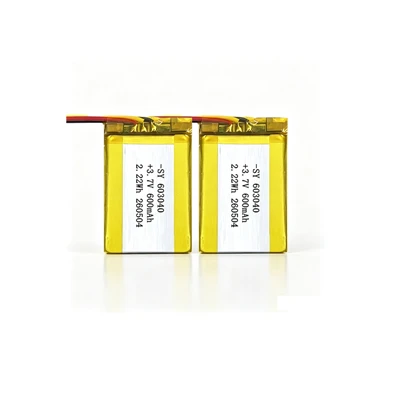
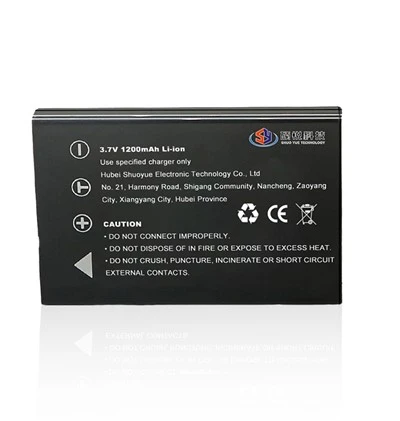
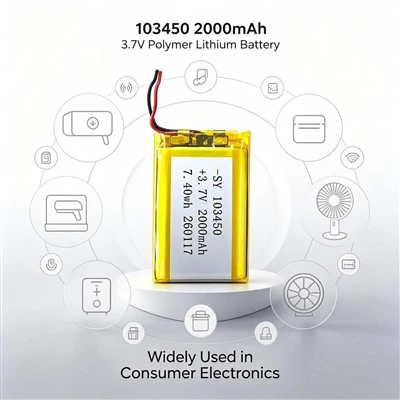
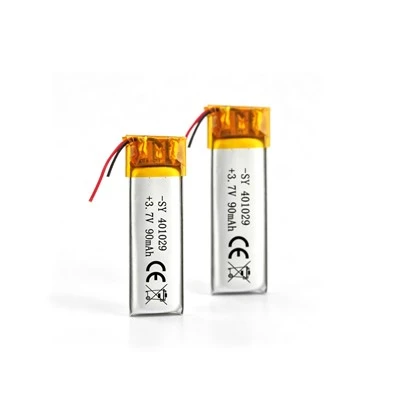
Lithium polymer batteries use lithium alloy as the positive electrode, polymer conductive materials, polyacetylene, polyaniline or polyparaphenol as the negative electrode, and organic solvents as electrolytes. The specific energy of lithium polyaniline batteries can reach 350W.h/kg, but the specific power is only 50-60W/kg, the operating temperature is -40-70 degrees, and the life is about 330 times.
Compared with lithium-ion batteries, the characteristics of lithium polymer batteries are as follows:
1. The problem of battery leakage is relatively improved, but it has not been completely improved.
2. It can be made into a thin battery: with a capacity of 3.6V 250mAh, its thickness can be as thin as 0.5mm.
3. The battery can be designed into a variety of shapes.
4. It can be made into a single high voltage: liquid electrolyte batteries can only connect several batteries in series to obtain high voltage, while polymer batteries, because they have no liquid themselves, can be made into a multi-layer combination in a single cell to achieve high voltage.
5. The discharge capacity is theoretically 10% higher than that of lithium-ion batteries of the same size.
Lithium polymer batteries have many advantages such as high specific energy, miniaturization, ultra-thinness, light weight and high safety. Based on these advantages, lithium polymer batteries can be made into batteries of any shape and capacity to meet the needs of various products; and it uses aluminum-plastic packaging, so that any problems inside can be immediately manifested through the outer packaging. Even if there are safety hazards, it will not explode, but will only swell. In polymer batteries, the electrolyte plays the dual functions of a diaphragm and an electrolyte: on the one hand, it separates the positive and negative electrode materials like a diaphragm, so that the battery does not self-discharge and short circuit inside; on the other hand, it conducts lithium ions between the positive and negative electrodes like an electrolyte. Polymer electrolytes not only have good conductivity, but also have the characteristics of light weight, good elasticity, and easy film formation that are unique to polymer materials. It also conforms to the development trend of chemical power sources that are light, safe, efficient, and environmentally friendly.